

Organisations increasingly depend on external suppliers to deliver transformation programmes, technology projects, specialist expertise and operational services. Yet these engagements are often governed less rigorously than permanent employees or contingent workers.
The Statement of Work is where that governance should begin.
What is a Statement of Work?
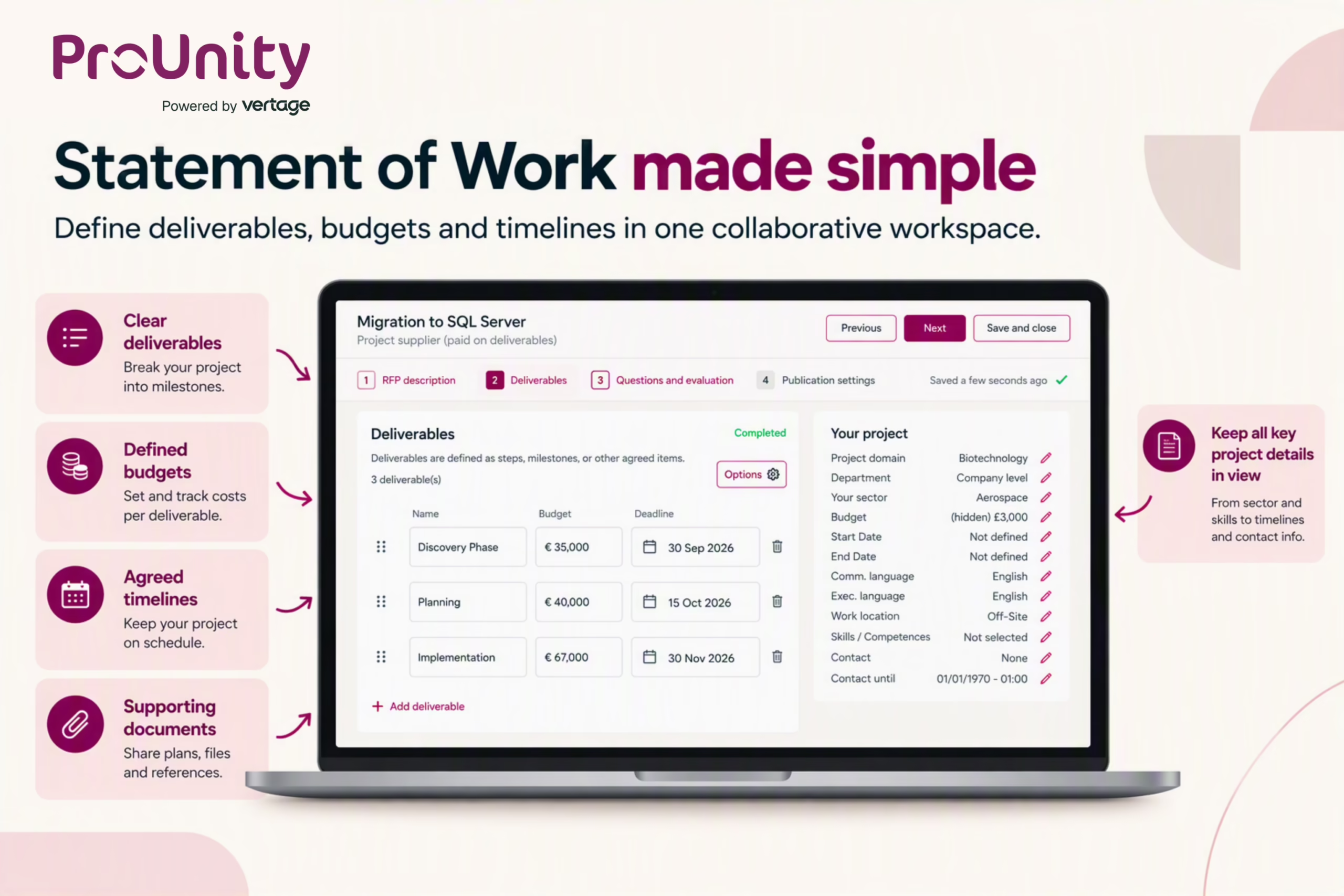
A Statement of Work, or SOW, is a contractual document that translates a business requirement into a clear supplier commitment. It defines what must be delivered, by when, under what commercial terms and how the organisation will determine whether the work has been completed successfully.
A strong SOW typically establishes:
- the business objective and scope
- specific deliverables
- milestones and deadlines
- roles and responsibilities
- acceptance criteria
- pricing and payment terms
- performance measures
- change-control procedures
- compliance obligations
This makes an SOW more than a description of activity. It converts a business need into a measurable commercial commitment.
The distinction matters because purchasing a service is not the same as engaging an individual worker. In a contingent workforce arrangement, the organisation typically directs the person’s day-to-day activities and pays for their time. Under a genuine SOW, the supplier takes responsibility for producing an agreed deliverable or outcome.
The two models therefore answer different questions:
- Contingent workforce management: Who performs the work?
- SOW and services procurement: What outcome must be delivered?
Both approaches can be valid. The risk arises when the commercial arrangement says “outcome” but the operational reality looks like staff augmentation—or when nobody can clearly establish what the supplier was expected to achieve.
Why SOW management matters
An organisation may sign a well-written SOW and still fail to realise its value. Effective SOW management must continue throughout the engagement.
Before work begins, the organisation needs to confirm that the proposed sourcing route is appropriate. During delivery, it must track milestones, manage changes and monitor supplier performance. Before approving payment, it needs evidence that agreed deliverables have been completed and accepted.
Without this discipline, organisations can pay for activity without knowing whether it produced the intended result.
Around 60% of services spend sits outside procurement visibility*, frequently because services are purchased directly by business teams. This makes value, governance and risk considerably harder to manage.
Information may also be spread across HR systems, procurement platforms, finance applications, MSP technologies and specialist SOW tools. Without a consolidated view, leaders cannot easily determine what has been purchased, which suppliers are involved, what outcomes were promised or where risk is accumulating.
The warning signs of weak SOW governance
Several symptoms indicate that an organisation may not have sufficient control over its services engagements:
- The same supplier is engaged independently by multiple departments.
- Milestones are vague or cannot be objectively accepted.
- Invoices are approved without reference to delivery evidence.
- Scope changes occur through informal conversations.
- No one has a consolidated view of suppliers, contracts or expenditure.
- Long-term workers remain under SOWs despite operating like contingent staff.
- Procurement becomes involved only after the supplier and commercial model have been selected.
These weaknesses create four recurring sources of leakage: misclassification, budget overruns, supplier sprawl and compliance risk.
They can also weaken negotiating power. Fragmented engagements prevent organisations from seeing their total relationship with a supplier, identifying duplicated work or comparing commercial terms across the enterprise.
SOW management and an MSP solve different problems
A Managed Service Provider usually focuses on the external workforce: workers, staffing suppliers, rates, onboarding and regulatory compliance. Services Procurement extends governance to supplier-delivered work, including scopes, deliverables, milestones, contracts, commercial changes, invoices and business outcomes.
An organisation can implement either model independently, but many require a combination. An MSP may provide excellent visibility over contingent workers while leaving significant project and services expenditure outside its remit. On the other hand, an SOW programme that ignores worker classification may allow staff augmentation to be presented as an outcome-based service.
The challenge escalates when information is fragmented across HR systems, MSP technologies, procurement platforms, SOW tools and finance systems. Without an integrated view, organisations cannot see their total external spend, supplier commitments, outcomes or risk. Combining the appropriate governance models creates coordinated control over workers, services, vendors, contracts, deliverables and compliance.
The objective is not to place every engagement into the same process. It is to ensure that every requirement enters through the right channel and receives the right governance. Automation can then reduce data entry and status chasing, freeing procurement to focus on category strategy, supplier judgement and strategic business decisions.
SOW governance turns procurement into outcome assurance
Procurement’s role is not simply to negotiate a lower price after a scope has already been decided.
Its greatest influence often comes earlier: challenging the demand, selecting the correct engagement route, improving the scope, creating competitive tension and establishing measurable acceptance criteria.
During delivery, procurement and business stakeholders can then use the SOW as a practical governance instrument. It becomes the basis for milestone reviews, change control, supplier-performance discussions and invoice validation.
This is how procurement moves from administering transactions to shaping sourcing strategy, managing enterprise risk and optimising outcomes. Automation can support reporting and routine administration, allowing procurement specialists to spend more time on commercial judgement, category expertise and strategic business decisions.
The goal is therefore clear: ensure that external services expenditure produces demonstrable value, beyond simple transactions.
Building SOW maturity
Organisations do not need to transform the entire lifecycle at once. SOW maturity can develop progressively through four capabilities:
- Classification and profiling (see it): Baselines what type of workers are engaged and where.
- Governance and administration (control it): Tracks SOWs, suppliers, invoices, compliance exceptions and reporting. Keeps services spend visible and organised.
- Contract-to-pay management (shape it): Governs delivery after signature (onboarding, milestones, change control, compliance, invoice validation to settlement).
- Source-to-pay orchestration (prove it): The full lifecycle from business demand through sourcing, contracting, delivery governance and payment
The right starting point depends on an organisation’s visibility, maturity and immediate risks. What matters is moving from isolated documents towards a repeatable operating discipline.
Start with a free two-hour audit
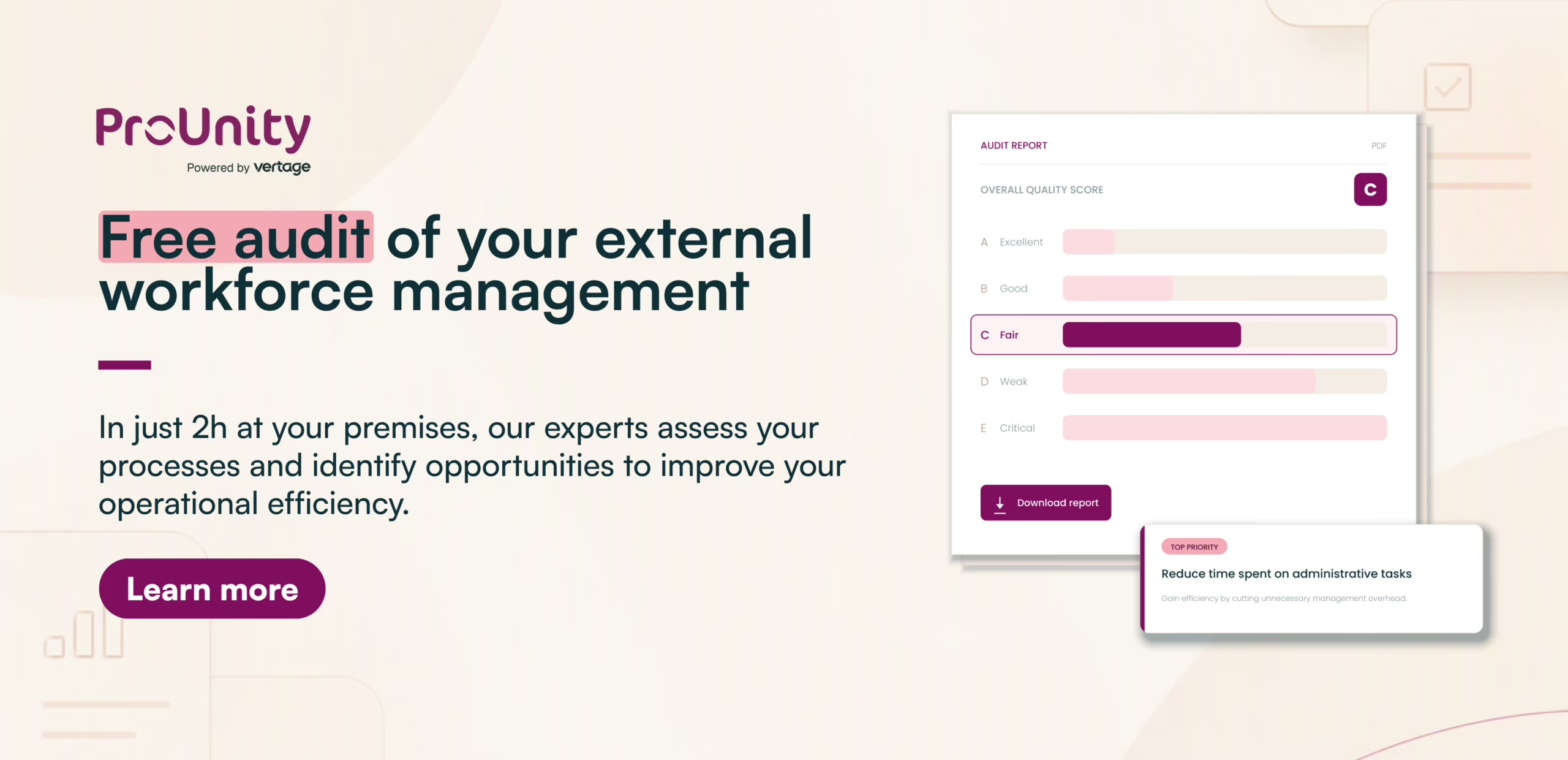
Understanding the opportunity begins with understanding how work is managed today.
Through our Sales Simulator free audit, our experts spend two hours with your team reviewing your current way of working. Together, we examine your processes, sourcing channels, internal workload and governance model.
The session helps identify:
- unnecessary administrative effort
- gaps in ownership or control
- inefficient sourcing routes
- potential compliance concerns
- opportunities for greater visibility and scalability
- practical improvements that can be implemented quickly
This is not a generic presentation or a predetermined recommendation. It is a focused assessment based on your organisation’s reality.
In two hours, you gain a clearer view of how your external workforce and services model performs, and where practical improvements can create greater control, efficiency and value.
—
* Sources: Procurement Leaders survey, Deloitte, McKinsey.
